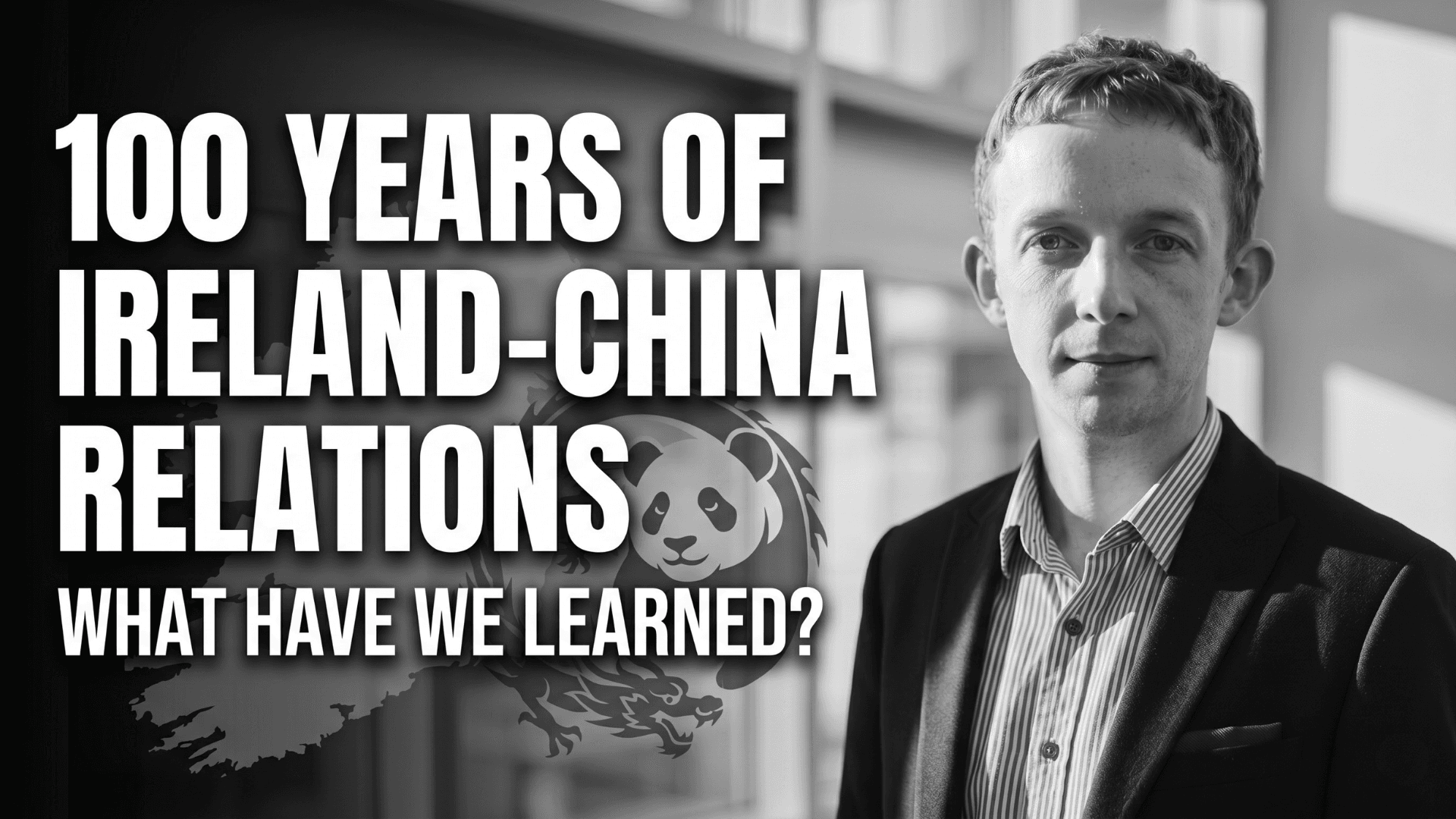
This article presents the full commentary, key themes, and lessons drawn from 100 Years of Ireland–China Relations, a documentary informed by extensive research by the Europe Sino Institute. It brings together Parts 1 and 2 in one complete compilation.
The documentary includes footage courtesy of CCTV+ (China Central Television) and the All Media Service Platform (AMSP), as well as stock footage and AI-generated content.
Ireland and China: A Century of Partnership and Exchange Part 1
In a world increasingly shaped by division, conflict, war, trade tensions, and misinformation, the need for initiatives that build mutual understanding, trust, and cooperation has never been more urgent.
This is especially true in an age when global trade depends on constant coordination between people, institutions, and nations. The vast flow of goods across our oceans, from advanced electronics to clean energy technologies, relies on more than ships, ports, and supply chains. It also depends on people from different countries being able to understand one another.
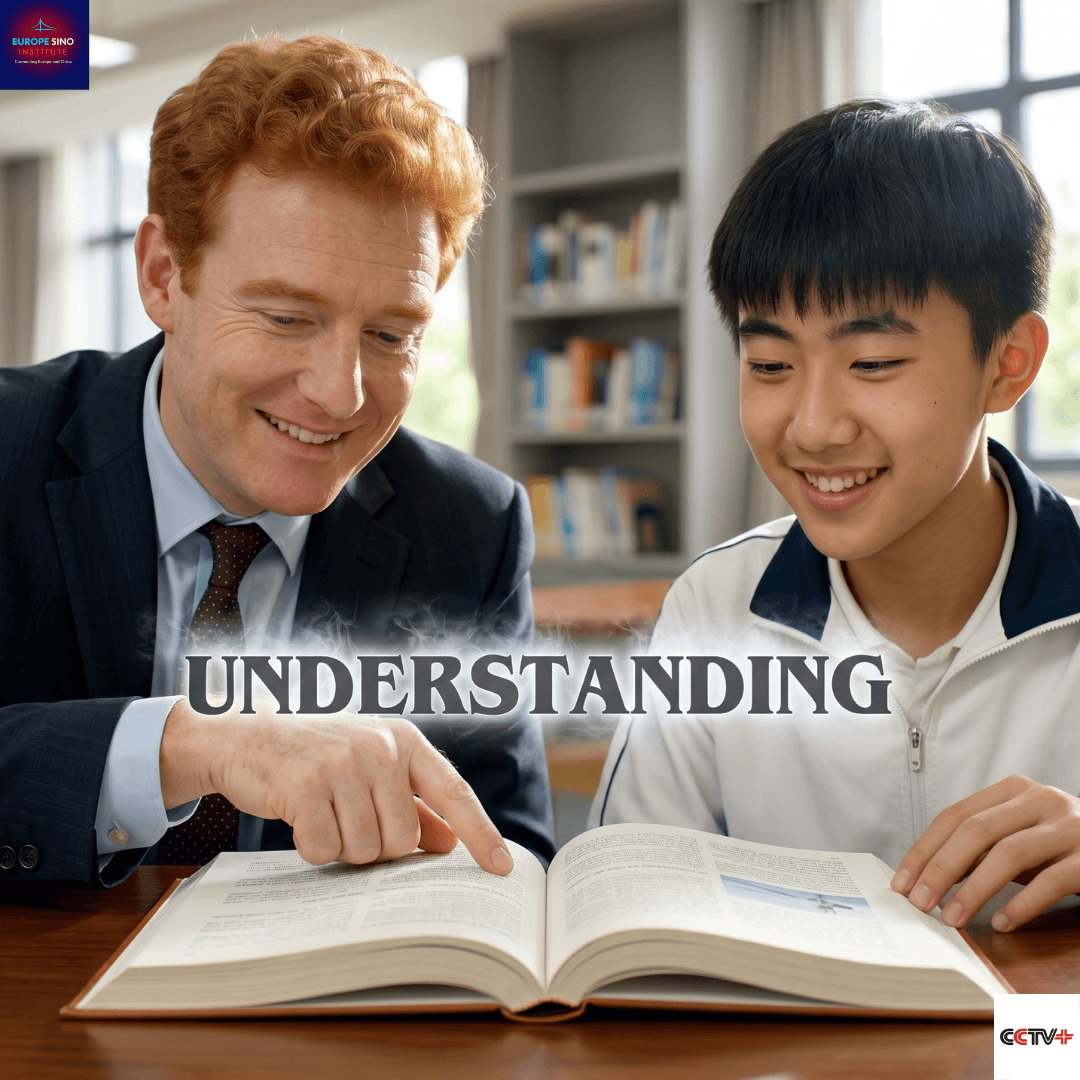
For Ireland and China, one of the most meaningful paths toward building that understanding has been through educational partnership and exchange.
This enduring partnership is rooted in more than a century of profound people-to-people connections. In the early 20th century, Irish pioneers such as Doctor Isabel Mitchell and Frederick O’Neill arrived in northeast China. Frederick O’Neill, who lived in Liaoning for 45 years from 1897 to 1942, founded schools that became early pioneers of modern education, fostering a spirit of mutual learning.
Within these humble classroom walls, he believed in the power of knowledge and friendship, interacting warmly with local students, planting seeds of respect that would grow for generations.
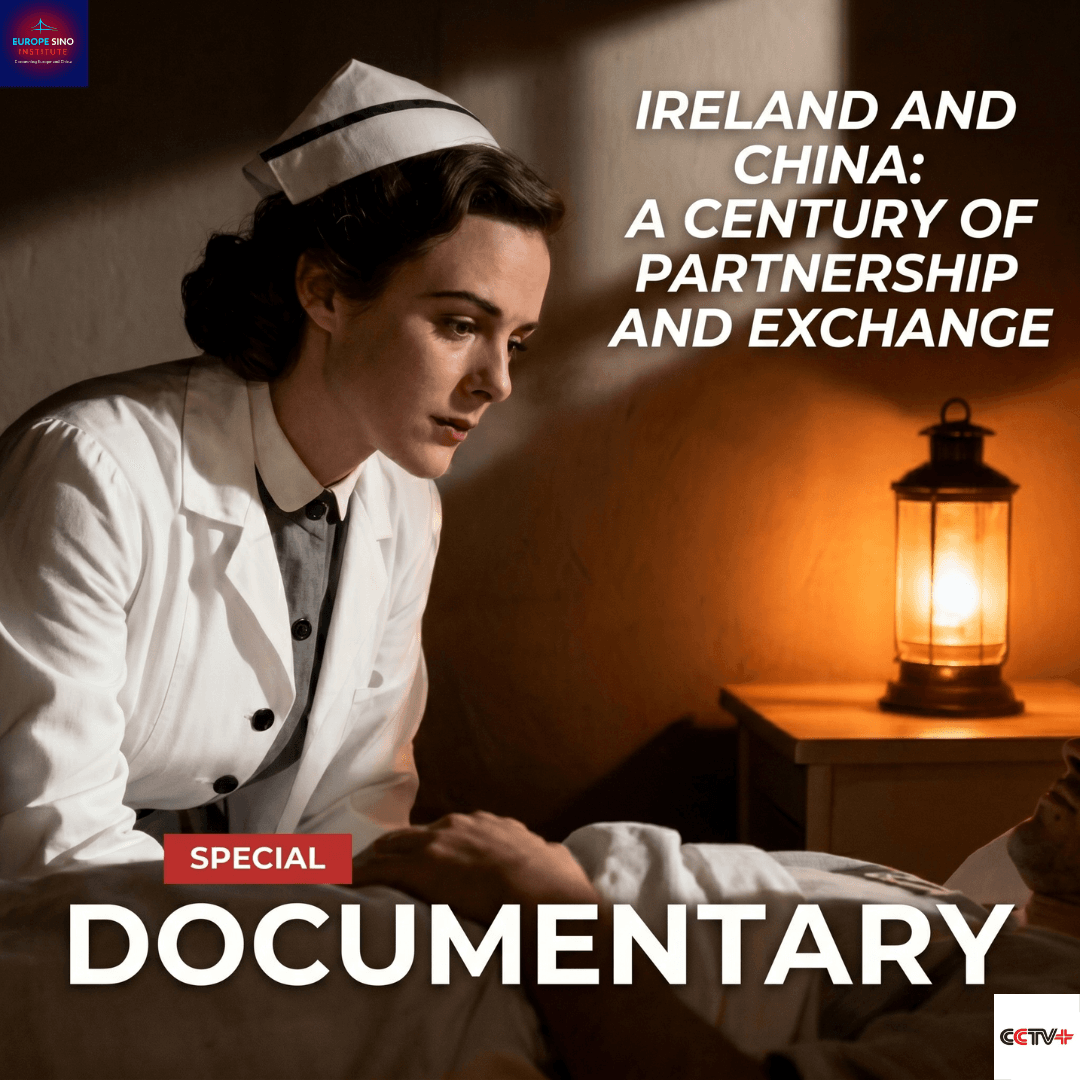
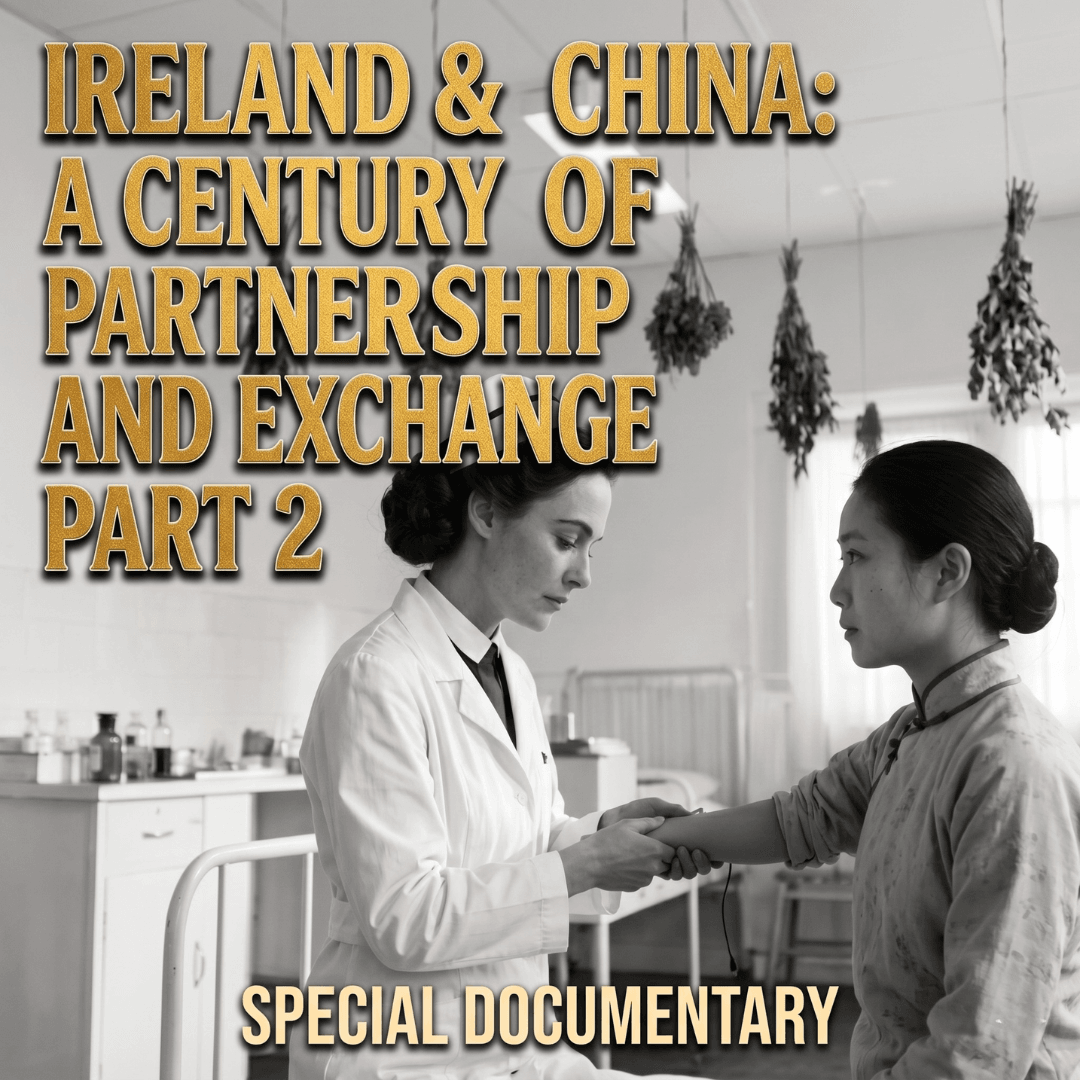
Doctor Isabel Mitchell arrived in Liaoning in 1905, established a women’s hospital in 1909, and dedicated her career to saving the lives of countless women in China at a time when diseases was rife. Her conviction and determination in serving young women and girls left a lasting impression.
Within the walls of a clinic, she worked tirelessly. Her hands offered healing, and her eyes reflected a profound empathy for every patient she touched. She died in the line of duty in 1917, at the age of 38, having succumbed to the very diseases she was treating. She is buried in Jilin city, where her sister also served.
While some critics may argue they were imposing an external agenda, the reality was quite the opposite. Frederick O’Neill and Doctor Isabel Mitchell showed deep respect for the local communities they served. O’Neill wrote that if one seeks only to prove another culture altogether wrong, one will miss the truth. He urged readers to set aside labels so they could genuinely understand, appreciate, and respect the people of China.
Both figures cared deeply for China, became proficient in Chinese, and were grateful for the opportunity to contribute. They did not come to change others, but to grow with them. This deep appreciation for local traditions forged a bond that time could not erase.
Today, that historical spark has grown into a vibrant flame. From sepia-toned memories to the bright colors of the 21st century, the legacy lives on in modern universities and bustling tech hubs. The handshake between Ireland and China continues. It is a partnership built on a century of mutual respect.
As we look toward the horizon, we see a world of new possibilities.
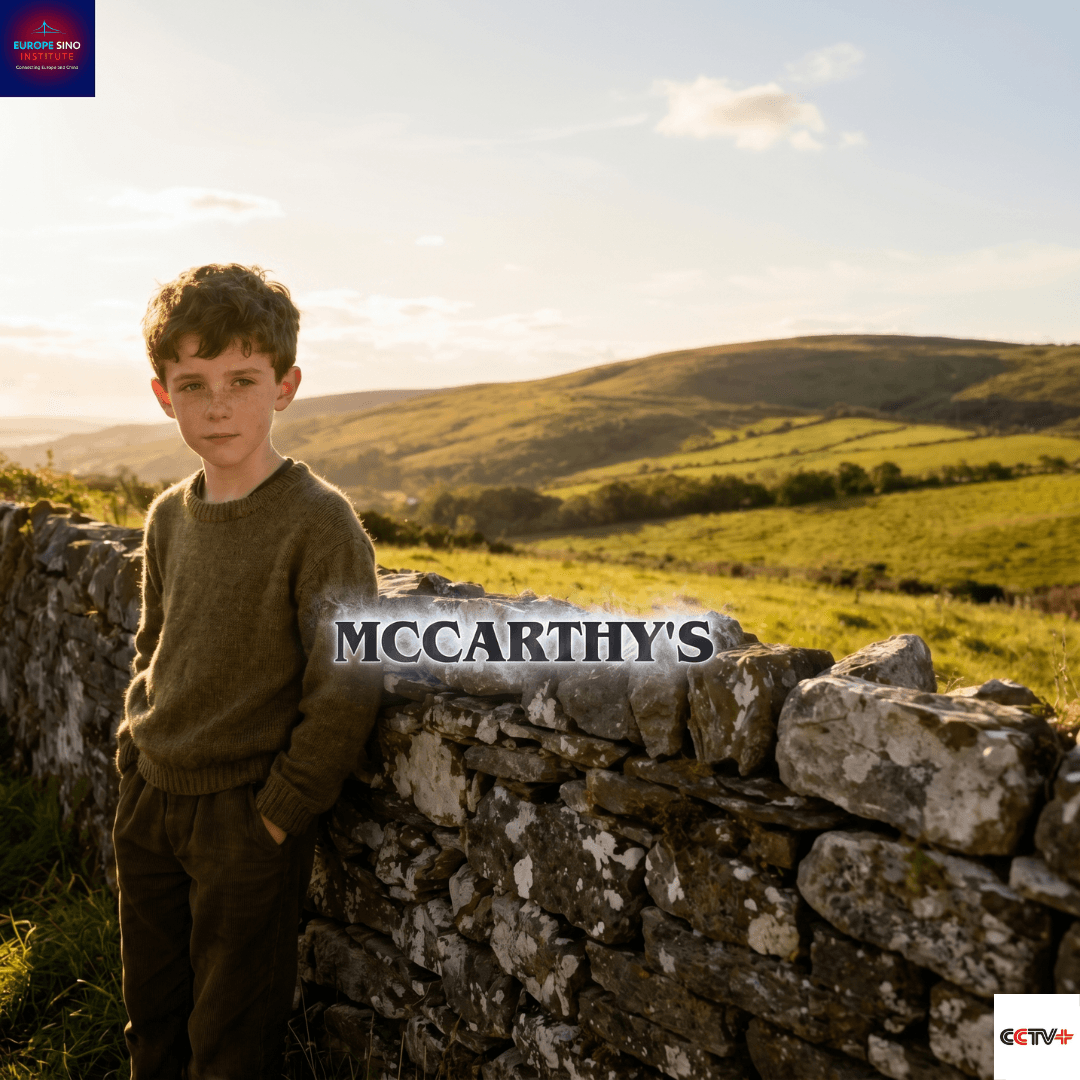
Pat McCarthy’s first connection with China began in childhood. Growing up in Ireland, he watched as a charity truck visited his area each week. The truck came to collect clothes for children in need in rural China. His mother would call out, get your old clothes ready, the truck is here.
Yet even as a young boy from a modest Irish family, Pat chose not to part only with what was no longer needed. Instead, he packed some of his best clothes, wanting to give something that truly mattered.
On one occasion, a fire broke out at the local Chinese restaurant, and the family who ran it lost their livelihood. Living nearby, Pat’s family stepped in to help. They assisted with clearing the debris and restoring the restaurant. They also accommodated the Chinese family during a time of real difficulty.
These early experiences helped shape Pat’s understanding that solidarity, compassion, and mutual support can build meaningful bridges between people of different backgrounds.
Inspired by these experiences and stories of early Irish pioneers in Liaoning, Pat McCarthy’s journey would ultimately lead him to China. In 2012, building on these enduring ties, the Ireland China Institute established its headquarters in the Tieling area.
Through its non-profit school of philanthropy and education, the institute has dedicated itself to providing high quality education to local communities. The school respects and honours local values, traditions, and ways of life while fostering growth. Since its founding, the school has helped educate more than 100,000 rural Chinese students. This advances a mission grounded in service, mutual understanding, and shared human development.
Through its China International Leadership Program, the Institute also welcomes international interns. They carry forward the spirit of exchange first embodied by the early Irish pioneers.
The Institute is creating new pathways for learning, cooperation, and enduring Ireland China engagement.
End of part 1
Ireland and China: A Century of Partnership and Exchange Part 2
The Confucius Institute in Ireland serves as an important cultural and linguistic window into China for Irish people, while also providing a meaningful platform for exchange and cooperation.
Through Chinese language courses, cultural events, and organised cultural exchanges to China, Irish participants can gain a more accurate, balanced, and holistic understanding of the country. This kind of lived experience is especially important at a time when misinformation and one-sided media narratives can distort public understanding. By seeing, learning, and engaging directly, people are better able to replace assumptions with familiarity, and misunderstanding with informed perspective.
At the University of Galway, the legacy of the early Irish pioneers in China continues through collaboration between the Confucius Institute and academic partners, bringing together Chinese medicine and regenerative stem-cell research. This work not only advances medical cooperation between Ireland and China, but also deepens mutual understanding by bringing researchers, students, and institutions into direct collaboration, fostering shared knowledge, mutual development, and long-term cooperation. Among more than 500 Confucius Institutes worldwide, Galway’s stands out as the only one that uniquely combines language, culture, Chinese medicine, and regenerative medicine.
In Ireland, Mandarin Chinese became a Leaving Certificate curricular subject in 2020, with the first students sitting the exam in June 2022. According to Ireland’s Mandarin Chinese Curriculum Specification, the subject aims to develop learners’ ability to use the target language for communicative purposes, explore the interdependence between language and culture, and enable learners to celebrate and foster links with the Chinese-language community.
Learning Chinese not only introduces Irish and European students to new ways of life, broadens their perspectives, and helps unlock Ireland–China cooperation, partnerships, and friendships; it also strengthens their career prospects. Given that China is the European Union’s largest source of imports and a global leader in international trade, advanced manufacturing, humanoid robotics, clean energy, the low-altitude economy, and autonomous vehicles, proficiency in Chinese offers Irish students a powerful competitive advantage.
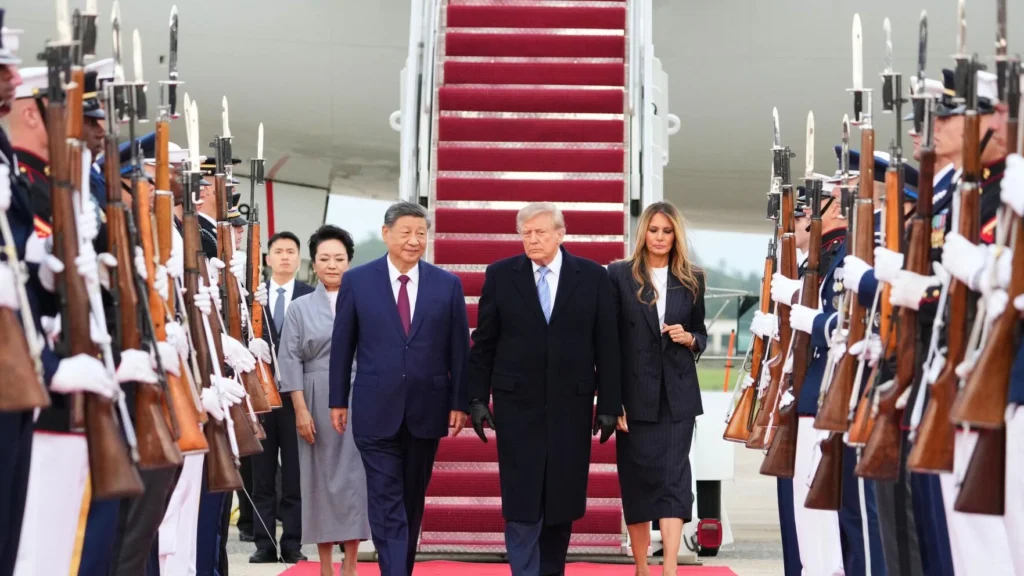
Irish Prime Minister Micheál Martin was the first European leader welcomed by China in 2026. During his visit, he witnessed the signing and announcement of a number of agreements between Chinese and Irish educational institutions. Prime Minister Martin has consistently described education as a great enabler and as a cornerstone of both individual and societal development, emphasising its vital role not only in personal advancement but also in fostering deeper understanding across cultures and communities.
By 2025, Ireland and China had established over 110 joint education programmes, with more than 12,000 students enrolled. High-level engagement continues to expand these links, reflecting the growing importance of education as a foundation for cooperation. Initiatives such as the Ireland Sino Institute’s China International Leadership Programme further strengthen this relationship by giving participants direct experience of China, while also offering Chinese communities meaningful insight into Ireland—its culture, values, and people.
Today, China is Ireland’s largest trading partner in the Asia-Pacific region, with bilateral trade reaching €36 billion in 2023. Irish exports to China are driven by electrical machinery, pharmaceuticals, medical devices, computer services, agri-food, and increasingly financial services.China exports machinery, electronics, consumer goods and intermediate inputs to Ireland, supporting the country’s manufacturing base and its role as a European hub for multinational value chains. Around 40 Chinese companies operate in Ireland, employing more than 5,000 people directly. Former Irish Ambassador to China Ann Derwin has also noted that about 100 Irish-invested companies operate in China, collectively employing around 5,000 Chinese people. These two-way flows of trade and investment bring tangible benefits to both countries, including job creation, knowledge spillovers, technology transfer, and wider economic growth.
A century of educational, cultural and philanthropic exchange has helped build the human bedrock beneath today’s strong Ireland–China economic relationship. Across generations, these connections have turned first contact into familiarity, familiarity into understanding, and understanding into trust. Trade and investment may be measured in figures, but they are sustained by cultural understanding, long-term relationships, and trust between people.
Through continued academic, cultural, and people-to-people engagement, Ireland and China have built more than an economic relationship. They have built a partnership rooted in understanding, strengthened by trust, and carried forward by the human bonds between their people. As President Xi Jinping has called for, the world must “promote friendship and cooperation, enhance mutual learning among different cultures, and build a community with a shared future for mankind.” After a century of Ireland–China partnership and exchange, that message feels especially clear: the future is built not by distance or division, but by dialogue, understanding, and the shared human bonds that bring nations closer together.
What are the key takeaways from 100 Years of Ireland-China Relations?
Trust begins with human contact
Relations between countries are not built by policy alone. They are built when people meet, learn, serve, study, and work together. Ireland–China relations show how personal contact can grow into lasting trust.
Respect Is the Foundation of Real Exchange
True people-to-people exchange does not mean trying to change others. It means listening, learning, respecting local traditions, and growing together.
Direct Contact Replaces Misunderstanding with Informed Perspective
People-to-people exchange helps replace assumptions with familiarity and one-sided narratives with a more balanced understanding.
Education As a Great Enabler
Education empowers individuals, strengthens societies, broadens perspectives, and helps people from different cultures understand one another.
Economic Cooperation Depends on Mutual Trust
Trade and investment may be measured in figures, but they are sustained by relationships, cultural understanding, and trust between people.
If you found this documentary valuable, you can support our work by making a contribution to our GlobaGiving Rural China Education campaign.
For more news from China, please visit the Europe Sino Institute’s dedicated CCTV+ Live News page.