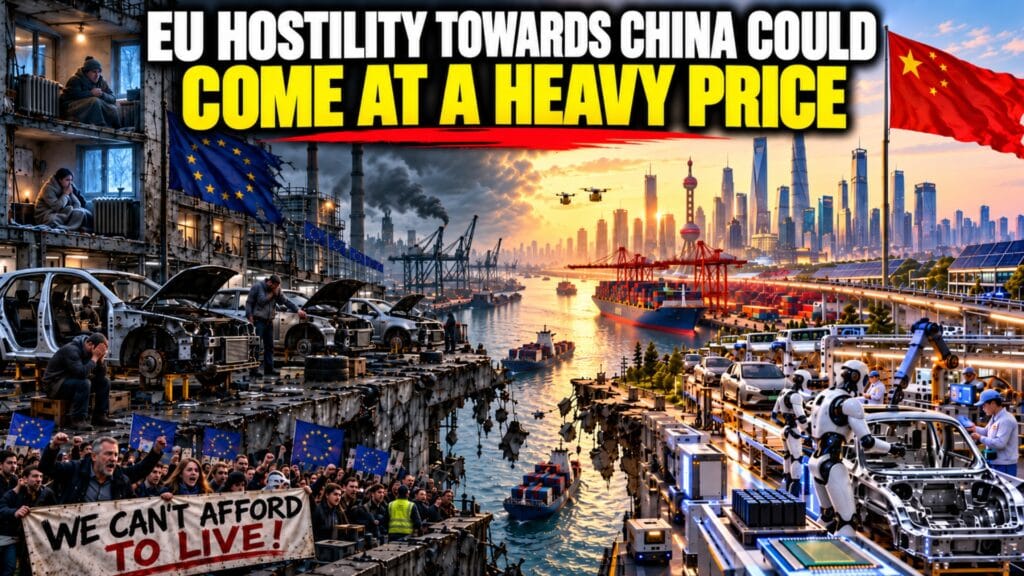
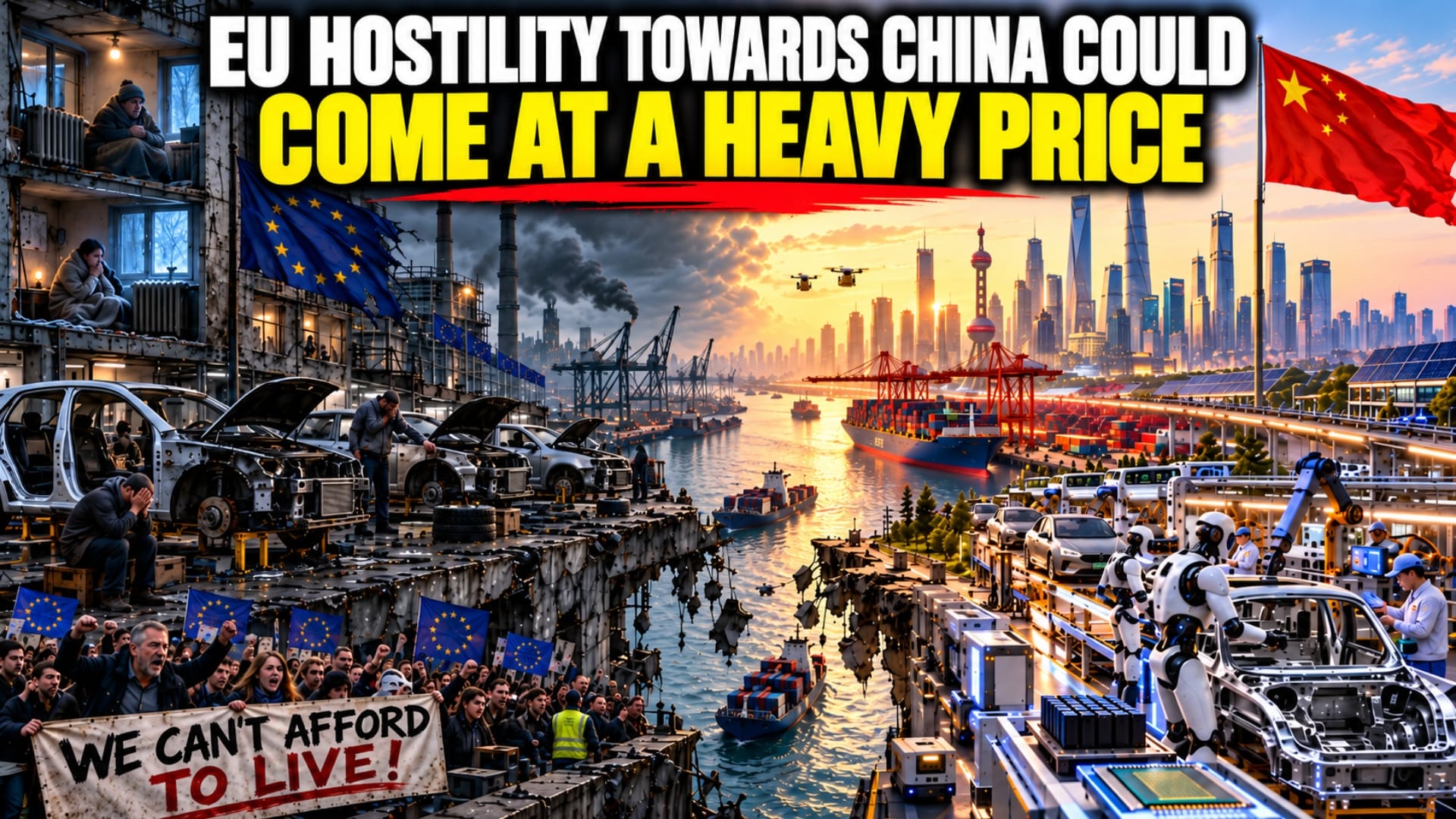
As Brussels considers increasingly aggressive trade restrictions against China, an uncomfortable question emerges: is Europe protecting its economic interests, or putting its own prosperity at risk?
The European Union appears determined to intensify its economic confrontation with China. According to Bloomberg, EU leaders are considering extraordinary new trade powers that could, in extreme circumstances, completely exclude Chinese goods from the European single market.
The proposals follow an understanding to restrict Chinese hybrid vehicle exports, while Brussels is examining additional measures targeting industries including chemicals, machinery and other manufactured products.
For an economic bloc that has traditionally championed international trade and open markets, this increasingly confrontational approach raises serious questions about its long term consequences.
Europe has legitimate concerns about industrial competitiveness, government subsidies and the ability of European businesses to compete fairly in the Chinese market. However, responding to Chinese competition through ever expanding restrictions could ultimately inflict considerable damage on European businesses, consumers and exporters.
The Trade Surplus Brussels Rarely Talks About
Much of Europe’s tougher position rests on its substantial merchandise trade deficit with China, which reached approximately €360 billion in 2025, according to European Commission figures.
Yet this headline figure tells only part of the story.
While Brussels frequently emphasises its goods deficit, considerably less attention is devoted to Europe’s positive balance in services trade with China.
According to the European Commission, the EU recorded a €21.3 billion services trade surplus with China in 2025. Europe Sino Institute research estimates that the cumulative surplus approached €200 billion between 2012 and 2024.
This distinction matters. According to the Council of the European Union, European services exports to China reached approximately €67 billion in 2025, including transport, professional and technical services, telecommunications, information technology and intellectual property licensing.
A comprehensive assessment of the relationship must therefore consider these substantial economic benefits rather than treating the merchandise deficit as the sole measure of success or failure.
Nor are Chinese imports exclusively finished consumer products. According to European Central Bank data, more than 40% of euro area goods imports from China in 2024 were intermediate products, including components and industrial inputs used by European manufacturers.
Crucially, the ECB’s 2026 Economic Bulletin found that increased exposure to Chinese intermediate imports was associated with a 0.6 percentage point boost in annual industrial production growth in affected sectors, based on research covering 2000 to 2022.
Rather than simply competing with European industry, Chinese imports also help lower production costs and support manufacturing competitiveness.
Restricting these imports therefore risks increasing costs for the very European businesses Brussels claims to protect.
Ireland Demonstrates the Value of Cooperation
Ireland provides a compelling example of what constructive diplomacy with China can achieve.
China is Ireland’s largest trading partner in Asia and its fifth largest globally. Europe Sino Institute research estimates that Ireland accumulated a €54 billion trade surplus in goods and services with China between 2012 and 2024.
Irish companies support approximately 5,000 jobs in China, while Chinese owned enterprises employ more than 5,000 people in Ireland.
During Taoiseach Micheál Martin’s official visit to Beijing in January 2026, he personally raised two pressing concerns with President Xi Jinping: the suspension of Irish beef exports to China and the substantial tariffs imposed on European dairy products. Following their discussions, Martin confirmed that President Xi had undertaken to engage Chinese officials on both matters.
Within days, China announced the reopening of its market to Irish beef, lifting restrictions that had been in place since 2024. Just over a month later, Beijing substantially reduced additional tariffs on certain EU dairy products, from provisional rates reaching 42.7% to final rates ranging between 7.4% and 11.7%.
Although the beef market was subsequently suspended again following a bluetongue outbreak in Ireland, these developments demonstrate the opportunities created through sustained diplomatic engagement. While the dairy tariff reduction cannot be attributed solely to Ireland’s intervention, the sequence illustrates why maintaining direct dialogue with Beijing matters.
For an export dependent economy such as Ireland, the lesson is significant: constructive diplomacy can help protect European exporters and advance their commercial interests, even amid escalating trade tensions between the EU and China.
Europe's Green Transition Exposes Flaws in Its China Policy
Europe’s increasingly restrictive approach towards China raises two important questions about the consistency of its energy and industrial policies.
First, the EU wants to accelerate its green transition and reduce energy costs, yet it remains heavily dependent on Chinese technologies essential to achieving those objectives.
According to Eurostat, China supplied approximately 98% of the EU’s imported solar panels in 2024. Meanwhile, the European Commission acknowledges that Chinese imports meet approximately 98% of European demand for rare earth magnets, critical components in electric vehicles, wind turbines and advanced manufacturing.
Chinese manufacturers therefore play a significant role in supplying the technologies needed to expand renewable energy generation and improve energy efficiency across Europe.
Trade restrictions affecting these products could increase costs for European households, businesses and energy developers, potentially slowing the very green transition Brussels seeks to accelerate.
Second, the EU wants greater economic independence from China, yet restricting access to essential Chinese products before developing competitive alternatives could undermine Europe’s own industries.
Reducing excessive dependence on any single country is a legitimate objective. However, establishing alternative supply chains requires substantial investment, skilled workers, technological capabilities and time.
If restrictions are introduced before European manufacturers can access reliable and competitively priced alternatives, production costs could rise, weakening industrial competitiveness rather than strengthening it.
The issue is not whether Europe should diversify its supply chains, but how it can do so without disrupting industries that currently depend on Chinese materials and technologies.
Europe must therefore consider whether some of its proposed trade restrictions could work against its own economic, industrial and environmental objectives.
The Danger of Economic Retaliation
Trade restrictions rarely occur without consequences.
Following the EU’s additional tariffs on Chinese electric vehicles in 2024, China pursued investigations affecting European brandy, pork and dairy products.
While Brussels disputes the justification for Beijing’s measures, the resulting uncertainty illustrates how trade confrontations can spread into unrelated industries.
European farmers and exporters may find themselves bearing the consequences of disputes originating elsewhere.
Europe cannot assume that restricting Chinese products will strengthen its economy without also imposing costs on European consumers and businesses.
A Better Way Forward: Mutual Prosperity Through Cooperation
Europe’s economic challenges cannot be resolved simply by restricting Chinese imports. A more constructive approach would recognise the strengths of both economies and promote greater trade, investment and industrial cooperation.
In the short to medium term, encouraging imports of competitively priced Chinese intermediate goods, solar panels, batteries and energy technologies could reduce manufacturing costs, accelerate Europe’s green transition and help alleviate energy and cost of living pressures.
More importantly, the EU and China should encourage joint ventures and strategic alliances within Europe, built on mutually beneficial commercial relationships.
China brings distinctive strengths in technological innovation, advanced manufacturing, production efficiency and highly developed supply chains. European partners offer engineering expertise, research capabilities, skilled workforces, established distribution networks and knowledge of local markets and regulations.
For Chinese businesses, such partnerships could expand access to European markets, strengthen international brand recognition and create new investment opportunities. For European companies, they could improve cost competitiveness, attract investment, generate employment and accelerate technological development.
The benefits over the longer term could be particularly significant. Joint research, shared production and workforce development could facilitate knowledge spillovers and technology transfer, strengthening Europe’s industrial capabilities and technological self reliance while enabling Chinese companies to deepen their international presence and benefit from European expertise.
Such arrangements would require transparent agreements, reciprocal commercial opportunities and effective intellectual property protection.
Importantly, closer economic partnerships need not eliminate competition. European and Chinese businesses can cooperate in certain industries, compete independently in others and even collaborate directly with their rivals when shared commercial interests make doing so worthwhile.
This highlights the relevance of cooperation, competition and coopetition, the three Cs of economic relationships. Cooperation enables businesses to pursue shared objectives, competition encourages innovation and efficiency, while coopetition allows commercial rivals to collaborate in areas of mutual interest.
Each serves a distinct economic purpose, and all three can coexist within a productive international trading relationship.
For example, the EU and China could encourage the establishment of joint ventures between European and Chinese companies within the EU, promote fair competition in international markets and support collaboration between rival manufacturers on shared technologies.
Battery manufacturing offers a particularly promising example, given China’s advanced battery technologies, manufacturing expertise and efficient supply chains, combined with Europe’s established automotive industry, skilled workforce and growing demand for electric vehicles. Such partnerships could strengthen local production, reduce manufacturing costs and facilitate technological exchange, while creating commercial opportunities for both sides.
Through carefully designed microeconomic policies that balance and optimise these three market dynamics, Europe and China could generate significant economic synergies, stimulate innovation and improve production efficiency. This could create mutually beneficial opportunities for businesses in both economies while delivering lower costs, better products and greater choice for consumers.
The Bigger Picture:
What Europe Stands
to Lose
The EU’s increasingly restrictive and hostile approach towards China risks missing the forest for the trees. By focusing narrowly on protecting individual industries and reducing its trade deficit, Brussels risks overlooking the wider economic benefits of its relationship with China, including affordable industrial inputs, access to critical raw materials, lower energy costs, export opportunities, technological cooperation and advancement, investment, job creation and greater consumer choice.
Such an approach could exacerbate Europe’s energy and cost of living pressures, slow productivity growth and technological advancement, and weaken its long term competitiveness. Rather than prioritising restrictions, the EU should pursue a more holistic, evidence based approach, grounded in the principle of mutually beneficial relations, that considers the full complexity and interconnected nature of its economic relationship with China.